
 Posted by Pam Hoddinott
  On Tue Aug 25
K-12 schools spend more than $8 billion annually on energy, making it the second-highest operating expenditure after personnel costs, according to the U.S. Department of Energy. For school leaders managing aging facilities and limited budgets, that makes energy more than a utility line item. It is a real opportunity to improve building performance, reduce operating costs, and support healthier learning environments for students and staff.
Making Energy an Asset®
School budgets are tighter, building facility maintenance is essential, and community expectations regarding education are higher than ever. Smarter energy management needs to be added to the curriculum. Schools can start by Making Energy an Asset®. Energy is typically viewed as a cost, but it should be considered an asset that can drive value. Making Energy an Asset® can be achieved by implementing energy efficiency projects within the facilities. Schools then reinvest the energy savings gained from the energy efficiency projects back into the school.
Benefits of Energy Efficiency and Sustainability
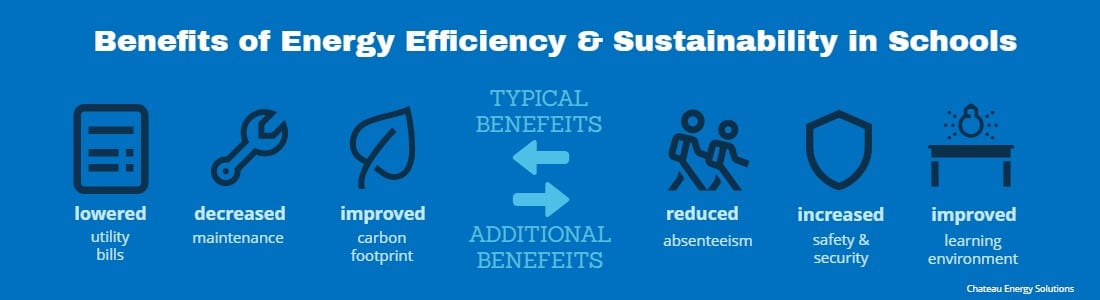
Facilities that are energy efficient enjoy many benefits from lower utility bills to decreased maintenance and an improved carbon footprint. Energy efficiency in schools also provides benefits many may not have considered, such as:
Partner with a Professional
Schools have an excellent opportunity to lower energy usage, improve sustainability goals, and create healthier spaces for students and staff. It helps to work with an energy management partner who is experienced in the education sector. Chateau Energy will perform an energy audit of the school facilities and set clear energy efficiency strategies specific to your needs. Based on our learnings, no- and low-cost energy conservation measures will be identified. These energy-saving projects could be new LED lighting, HVAC upgrades, sustainability strategies, and more. These measures will be prioritized and then implemented to optimize energy use and maximize energy assets for the organization.
These energy management strategies can often be implemented with limited disruption by scheduling work after hours, during breaks, or in phases that keep occupied areas functioning safely.
Lowering energy usage within schools will not negatively affect learning, just the opposite. Becoming more energy efficient can help create a healthier and better performing environment for students and faculty.
Review our case studies to see how Chateau Energy Solutions helps the education industry with smart, effective energy management programs and tailored sustainability practices.
Chateau Energy Solutions Making Energy an Asset®
Whether you need to fast-track power for a new facility, upgrade hundreds of sites, or electrify your fleet, Chateau Energy helps you reach your energy goals faster and smarter.