 Posted by Pam Hoddinott
  On Fri Mar 13
Key Takeaways
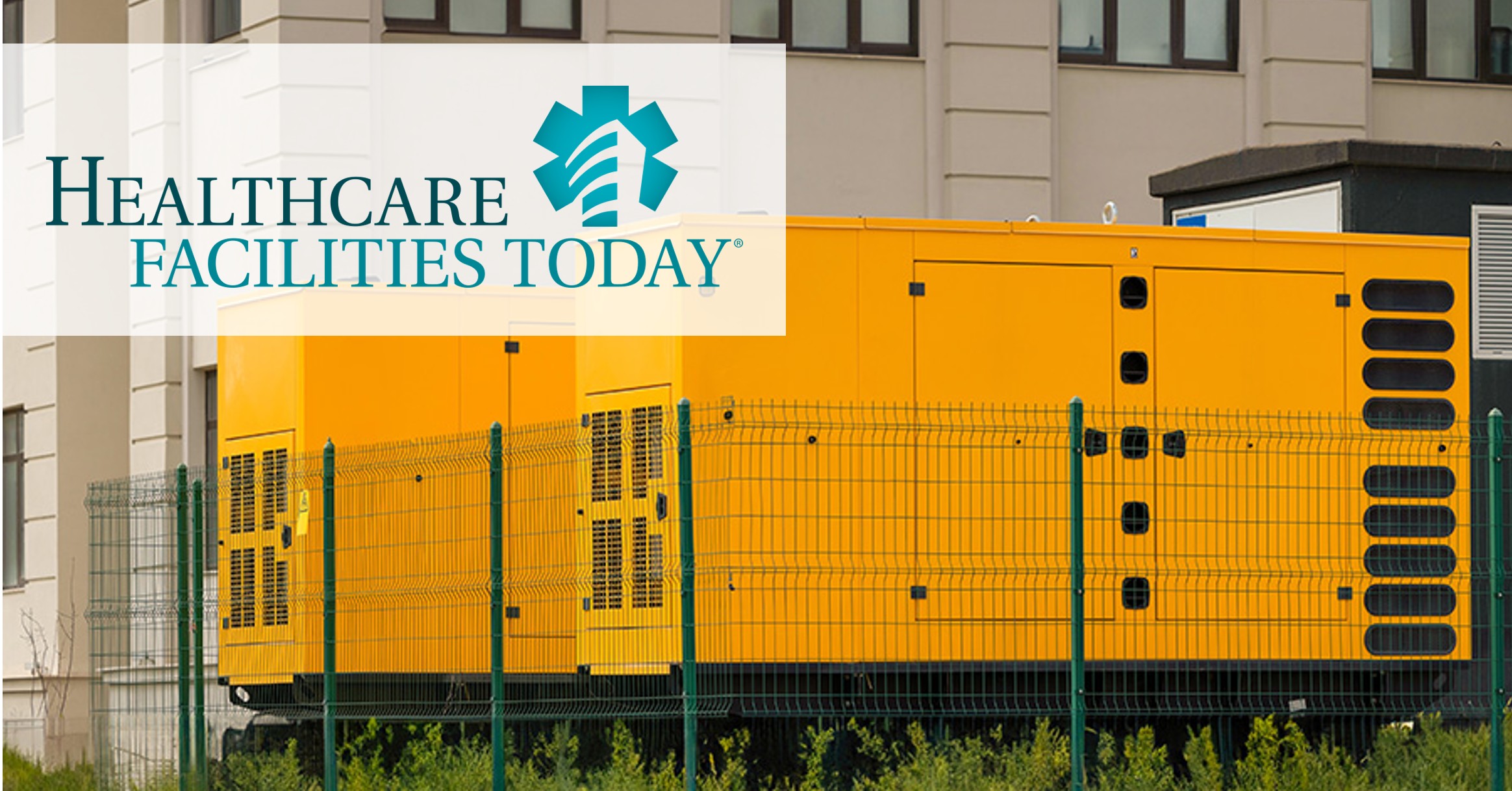
Healthcare facilities have always depended on reliable power. For decades, the solution to outages was straightforward: install backup generators and ensure they are maintained. But as hospitals become more dependent on digital systems, advanced diagnostic equipment, data infrastructure, and 24/7 connectivity, the conversation around resilience is evolving.
In Healthcare Facilities Today, Chateau Energy explores why resilience today requires more than standby generation. The article challenges healthcare leaders to think beyond single-point solutions and toward layered strategies that account for grid vulnerability, infrastructure limitations, and growing electrical demand.
Backup generators are essential, but they are only one piece of a much larger resilience framework.
Healthcare environments now operate with significantly greater energy intensity than they did a decade ago. Electronic medical records, imaging systems, surgical technology, telehealth infrastructure, data storage, and climate-controlled environments all rely on uninterrupted electrical service.
At the same time, external risks are increasing:
The traditional model, utility power supported by backup generators during outages, assumes outages are short, predictable, and isolated. In reality, disruptions today can be prolonged, complex, and multi-layered.
If resilience planning stops at generator installation, healthcare facilities risk overestimating their preparedness.
Layered energy resilience is not a single product or piece of equipment. It is a strategic infrastructure philosophy.
Chateau Energy approaches layered resilience as a strategy that includes:
Evaluating alternate feed configurations, redundant distribution paths, and onsite generation capacity to avoid dependency on a single point of failure.
Understanding which systems must remain operational during disruption and ensuring energy capacity is allocated accordingly. Not all loads are equal in a healthcare environment.
Aging switchgear, outdated medium-voltage components, and undersized distribution systems can undermine generator investments. Resilience requires a strong electrical backbone.
Generators only function as long as fuel is available. Planning for extended outages requires logistics coordination, storage strategy, and contingency planning.
As hospitals expand services and integrate more technology, energy demand increases. Resilience planning must anticipate growth rather than simply meet today’s load profile.
Layered resilience shifts the mindset from emergency response to strategic continuity planning.
Chateau Energy supports healthcare organizations by aligning resilience strategy with mission-critical infrastructure planning.
Our approach focuses on:
Importantly, we do not treat resilience as an isolated project. It is integrated into broader infrastructure planning, including electrification, efficiency initiatives, and operational modernization.
This is where Making Energy an Asset® becomes tangible. When resilience investments are designed strategically, they support uptime, reduce operational risk, and reinforce financial stability.
What inspired the article:
This article was inspired by conversations with leaders who believed their facilities were resilient until deeper assessments revealed single points of failure. Generators were in place, but distribution bottlenecks, fuel assumptions, or load prioritization gaps created unseen vulnerabilities.
Why this topic matters now:
Grid instability, extreme weather events, and rising energy demand are reshaping how resilience should be evaluated. Hospitals cannot afford downtime. Even short interruptions can disrupt surgeries, patient monitoring systems, or digital health platforms.
More healthcare leaders recognize that resilience extends beyond compliance standards. It determines whether clinical operations continue uninterrupted and communities remain supported during disruption.
How Chateau Energy is expanding on this work:
Our team is helping organizations conduct comprehensive resilience assessments that go beyond generator capacity. This includes scenario modeling, infrastructure audits, load growth forecasting, and integration of onsite generation with long-term capital planning.
A related area gaining attention is electrical capacity acceleration, ensuring that resilience investments also unlock future growth opportunities. Strategic onsite generation and infrastructure upgrades can simultaneously increase reliability and reduce dependency on constrained utility timelines.
Resilience investments are often viewed as insurance – necessary but reactive. In reality, layered energy resilience is a strategic enabler.
Healthcare leaders should evaluate:
Layered resilience supports:
Hospitals exist to deliver care, not manage energy complexity. But resilient energy infrastructure is foundational to delivering that care consistently.
By moving beyond traditional backup strategies and embracing layered resilience planning, healthcare organizations position themselves for continuity, growth, and long-term stability. Read the full article at Healthcare Facilities Today
Chateau Energy Solutions Making Energy an Asset®
Whether you need to fast-track power for a new facility, upgrade hundreds of sites, or electrify your fleet, Chateau Energy helps you reach your energy goals faster and smarter.